


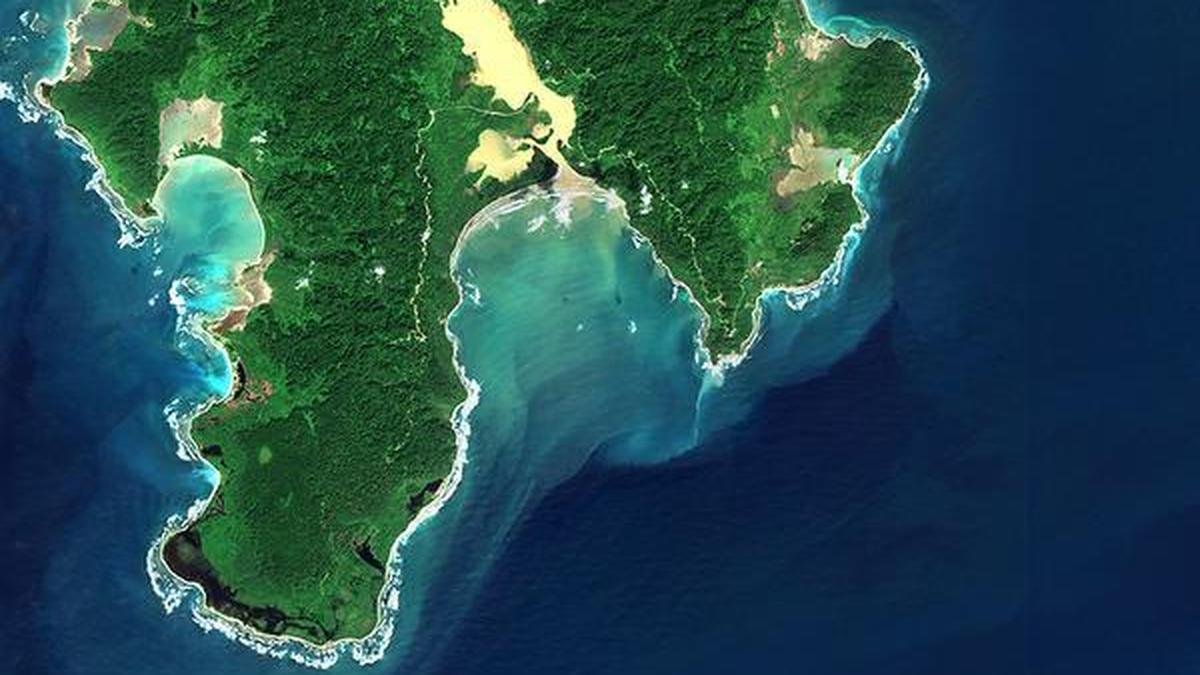
A Bench of the National Green Tribunal on Monday (February 16, 2026) cleared the way for the ₹92,000 crore Great Nicobar Island mega-infrastructure project, noting that “considering the strategic importance” of it and “other relevant considerations”, “we do not find any good ground to interfere”. It disposed of applications related to the Environment Clearance (EC) for the project, with a direction to authorities “to ensure full and strict compliance of EC conditions”.
The Bench was hearing a batch of applications related to the EC granted for the project in 2022. While hearing this challenge to the EC, the NGT in 2023 called for the formation of a High-Powered Committee to address certain issues related to the protection of coral colonies, nesting sites of leatherback turtles, and parts of the project allegedly falling within ecologically protected zones.
Also read | The making of an ecological disaster in the Nicobar
The applicants in the present case argued that the government had erred in limiting the terms of reference for the HPC to three issues, which were “truncated and factually incorrect.” They added that the issues of protecting corals, nesting sites, and project areas entering protected zones had not been properly examined. The applicants also called for the report of the HPC to be made public.
In the order pronounced on Monday (February 16, 2026), the NGT said that “adequate safeguards” had been provided in the conditions specified in the EC, which the Tribunal had already refused to interfere with in its 2023 order. The NGT added that the remaining issues had “been dealt with” by the HPC in its exercise to revisit the EC conditions.
The NGT Bench, headed by the Chairperson Justice Prakash Shrivastava, noted that it found no error in the drafting of the terms of reference for the HPC, adding that the petitioners did not point out “any other substantial issue” that should have been examined by the HPC.
Further, noting the Union government’s stance against the HPC report’s public disclosure, given that it is “of strategic, defence and national importance and has confidential and privileged information”, the NGT said, “The above disclosures reveal that the project is very important for India from the strategic point of view.”
In the order dated February 16, the NGT said, “A balanced approach is required to be adopted while considering the issue of allowing development of the port on a strategic location, the importance of which has already been stated in the previous paragraphs of this order and taking adequate steps to carry out the activity strictly in terms of the ICRZ Notification, 2019 instead of prohibiting the activity if the objection is based on apprehension.”
The NGT order said that to ensure “full and effective” compliance with the EC conditions, the Environment Ministry “will undertake all measures to protect the coral reefs along the coastal stretch and will also ensure coral regeneration through proved scientific method for regeneration of coral in appropriate identified areas abutting the project areas”. The NGT asked the Environment Ministry to prepare and approve an “implementation plan” in this regard, suggesting that agencies like the Zoological Survey of India and the National Institute of Oceanography may be involved.
On the erosion of shorelines on the Great Nicobar Island, the NGT said it “will be the responsibility” of the Environment Ministry to “ensure that on account of proposed constructions which includes foreshore development, there is no erosion/shoreline change abutting the project area and all along the islands”. “The shoreline of the island will be protected ensuring no loss of sandy beaches as these beaches provide nesting sites for turtles, bird nesting site apart from protecting the islands,” the NGT said.
On the protection of corals, the NGT relied on the government’s submissions that “no coral reef exists within the work area of the project”, noting that plans were already underway for the translocation of the existing scattered corals in areas adjoining the project area as recommended by the Zoological Survey of India.
The petitioners had also submitted that the Environmental Impact Assessment for the project was conducted for just one season, as opposed to three seasons as mandated by regulations. On this point, the NGT noted the government’s submissions that “since there is no high erosion site in Andaman & Nicobar, therefore, three-season data is not required”.
Further, on the issue that parts of the project enter the Coastal Regulation Zone-1A, the NGT took note of submissions that ground-truthing of the project areas had been conducted and that the “High Powered Committee, after due verification, has found that no part of the Project area is in CRZ-IA area”. The NGT also ruled that the “doubt” expressed by the is “expelled” by the conditions already present in the EC.
While the project’s Environment Clearance was under challenge before the NGT, aspects of the project’s Forest Clearance are currently under challenge before the Calcutta High Court. Apart from the alarm raised by conservationists and activists about the project’s potential damage to the ecology of the Great Nicobar Island and the waters around it, locals on the island have objected to the project’s approval, alleging that their consent had not been taken lawfully for it.
The locals on the island, from the Nicobarese and Shompen communities (both Scheduled Tribes), have alleged that their rights on forest lands supposed to be used for the project had not been settled, and have more recently accused the Andaman and Nicobar Islands Administration of “coercing” them to surrender their ancestral lands.
Published – February 16, 2026 11:40 am IST